Seasonal Track Condition Impacts on Multi-Race Accumulator Success Rates
Written by Ulrich Berger · Sep 24, 2026
Seasonal Track Condition Impacts on Multi-Race Accumulator Success Rates
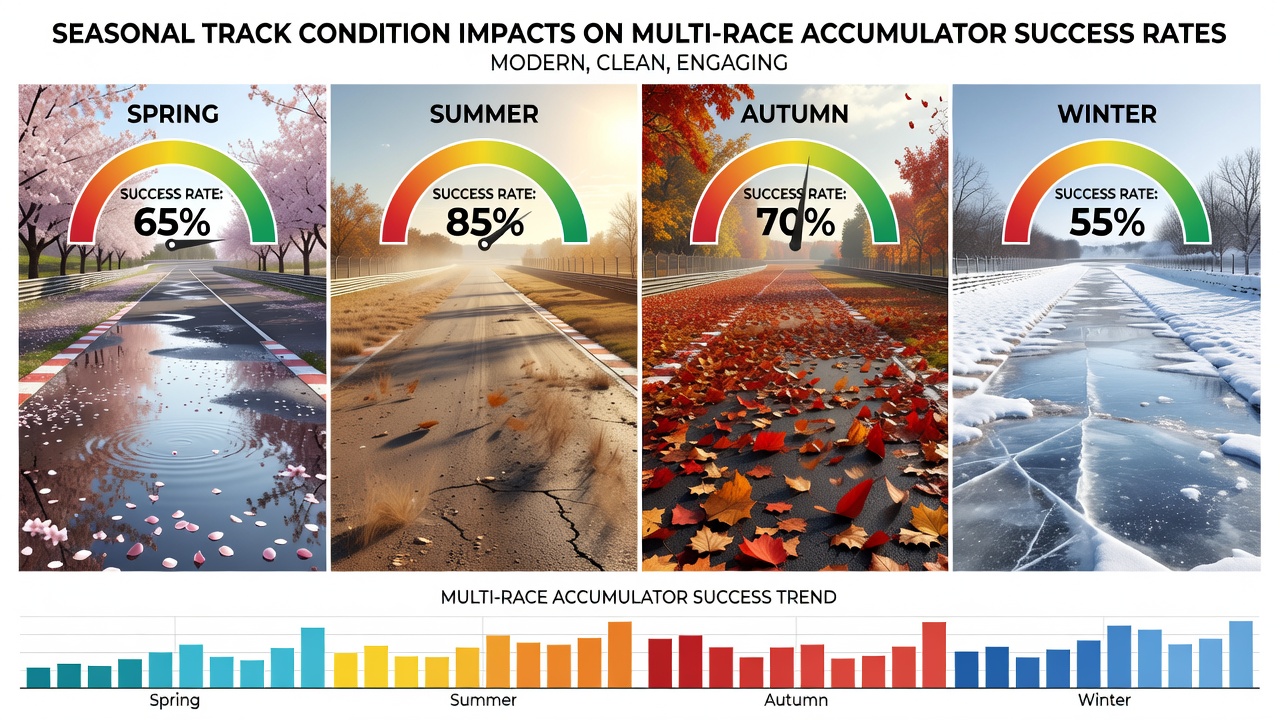
Track surfaces change with each season, and those shifts alter how horses perform across consecutive races in accumulator bets. Data from multiple racing jurisdictions indicate that success rates for multi-race wagers fluctuate when ground conditions move from firm to soft or frozen states. Observers note that autumn brings increased rainfall in many regions, which turns turf into heavier going and forces jockeys to adjust pacing strategies mid-card.
How Track Surfaces Respond to Weather Patterns
Spring often delivers consistent temperatures that keep tracks near optimal firmness, yet sudden showers can create patchy sections that reward horses with specific stride lengths. Summer heat bakes dirt courses into faster but more brittle surfaces, and this leads to higher injury reports while also changing the order in which contenders tire. Winter freezes introduce variable bounce that punishes late runners in longer legs of an accumulator. Researchers have documented these patterns through sensor data collected at racecourses across Australia and North America, where moisture meters record daily readings that correlate directly with finishing times.
Multi-race accumulators compound these effects because a single misjudged leg can nullify earlier correct selections. When one race occurs on drying ground while the next takes place after heavy rain, the statistical profile of each contest diverges sharply. Figures compiled by the Australian Racing Board show that accumulator payout rates drop by measurable margins during transitional months when three or more consecutive races feature changing conditions.
Regional Data and Seasonal Comparisons
North American dirt tracks exhibit pronounced seasonal swings that affect speed figures used in accumulator modeling. Canadian records from the past decade reveal that spring thaw periods produce inconsistent kickback, which slows early pace and benefits closers in later races on the same card. In contrast, late-summer cards on the same circuits deliver more predictable fractions because surfaces stabilize under repeated irrigation. Those who've analyzed large datasets note that success percentages for four-leg accumulators improve when all races share similar moisture levels, whereas mixed-condition cards introduce greater variance.
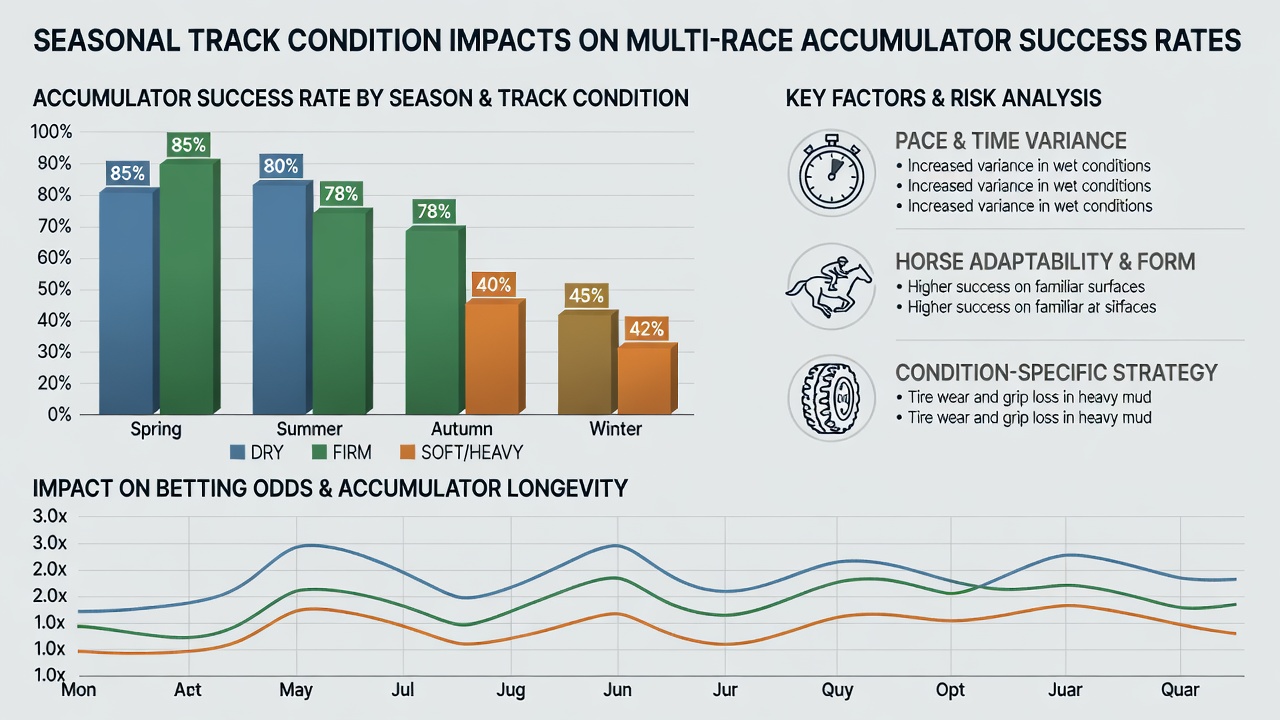
European turf racing follows a different calendar. The transition from summer firmness to autumn softness typically occurs between late August and early October, and this window coincides with major festival meetings that attract large accumulator pools. According to Australian Thoroughbred Racing reports, horses that excel on good-to-soft ground in September maintain higher strike rates in subsequent legs when the card moves to heavy conditions. Data sets extending into September 2026 continue to track these correlations, showing that trainers increasingly prepare runners for expected ground changes rather than relying on historical averages alone.
Statistical Patterns in Accumulator Outcomes
Longer accumulators magnify small differences in track influence. A three-race wager may tolerate one variable surface, but five-race or six-race tickets rarely survive when two or more legs encounter unexpected rain or frost. Studies conducted by the University of Melbourne equine research group found that time differentials widen by up to 4 percent on rain-affected tracks compared with firm conditions, and those gaps compound across multiple races. Consequently, bettors who adjust selections based on updated going reports achieve different success distributions than those who use static speed ratings.
Case examples from major meetings illustrate the point. One series of autumn cards in Victoria demonstrated that accumulator tickets including both a sprint on softening ground and a staying race on the same surface produced lower returns than tickets confined to uniform conditions. Similar patterns appear in North American graded stakes where synthetic tracks offer more stability yet still respond to temperature drops that alter cushion depth overnight.
Practical Adjustments Observed Across Jurisdictions
Trainers and analysts now incorporate real-time moisture readings into preparation routines. This practice emerged more widely after several high-profile meetings where sudden weather shifts altered expected results. The shift has prompted racing authorities in multiple countries to publish enhanced track reports that include projected changes between races, allowing participants to refine accumulator construction accordingly. Those adjustments appear in entry-level as well as elite contests, where even modest cards show measurable differences in payout structures when conditions vary within a single afternoon.
Conclusion
Seasonal track variations create measurable differences in multi-race accumulator performance across racing regions. Data collected through September 2026 confirm that moisture levels, temperature swings, and surface type interact to change finishing order probabilities. Racing organizations in Australia, Canada, and the United States continue to release updated figures that link these environmental factors to wager outcomes. The patterns remain consistent enough for continued monitoring yet variable enough to require ongoing analysis of each meeting's specific conditions.